
 EN
EN  RO
RO  FR
FR 
Wisdom teeth (or third molars) are known for the discomfort they can cause when they try to erupt. For many young adults, the first signs of discomfort or pain at the back of the mouth quickly raise the question: Do I have to have my wisdom tooth removed, or can I keep it?
In this article, we explain when it’s advisable to save a wisdom tooth, when extraction is necessary, and what you can do to relieve the pain.
Why do wisdom teeth cause problems?
Wisdom teeth are the last molars to erupt, usually between the ages of 17 and 25. From an evolutionary standpoint, the jaws of modern humans have become smaller, which is why these molars often lack the space needed to grow properly.
When there is insufficient space, a tooth may remain impacted (completely inside the bone) or partially impacted (with only part of it breaking through the gum). This improper positioning creates areas that are difficult to clean, leading to the buildup of bacterial plaque, gum inflammation, and acute pain.

When can a wisdom tooth be saved?
Not every wisdom tooth needs to be extracted automatically. The dentist will recommend keeping it if several important clinical conditions are met.
The tooth can be saved if it has fully erupted, is positioned straight on the dental arch, and aligns correctly with the opposing tooth, allowing for a normal bite. It is also essential that the patient be able to clean it properly with a toothbrush and dental floss.
Another important reason for saving a wisdom tooth is when it is healthy and can eventually serve as an anchor for a prosthetic restoration, in cases where other adjacent molars have been lost.
When is it necessary to have a wisdom tooth removed?
Extraction is recommended when the presence of the tooth jeopardizes the health of the entire dental arch or causes recurring pain.
Here are the main situations in which extraction becomes the best option:
- Recurrent pericoronitis: Inflammation and infection of the gum covering a partially impacted molar, causing pain when swallowing and difficulty opening the mouth.
- Damage to the adjacent tooth: The wisdom tooth grows at an angle and pushes against the root of the molar next to it, causing deep cavities or resorption of the molar’s root.
- Dental malocclusion: The pressure exerted by the molar can disrupt the alignment of the other teeth, sometimes compromising an existing orthodontic treatment.
- Deep cavities that cannot be treated: If the tooth has advanced decay and its position prevents instruments from accessing it for proper root canal treatment.
- Cyst formation: Cystic lesions may develop around an impacted tooth, destroying the surrounding jawbone.
What should you do when pain occurs?
If you experience localized discomfort, throbbing, or pressure at the back of your mouth, the worst thing you can do is wait for the symptoms to go away on their own. Taking pain relievers may temporarily mask the problem, but the inflammation beneath the gum will continue to progress.
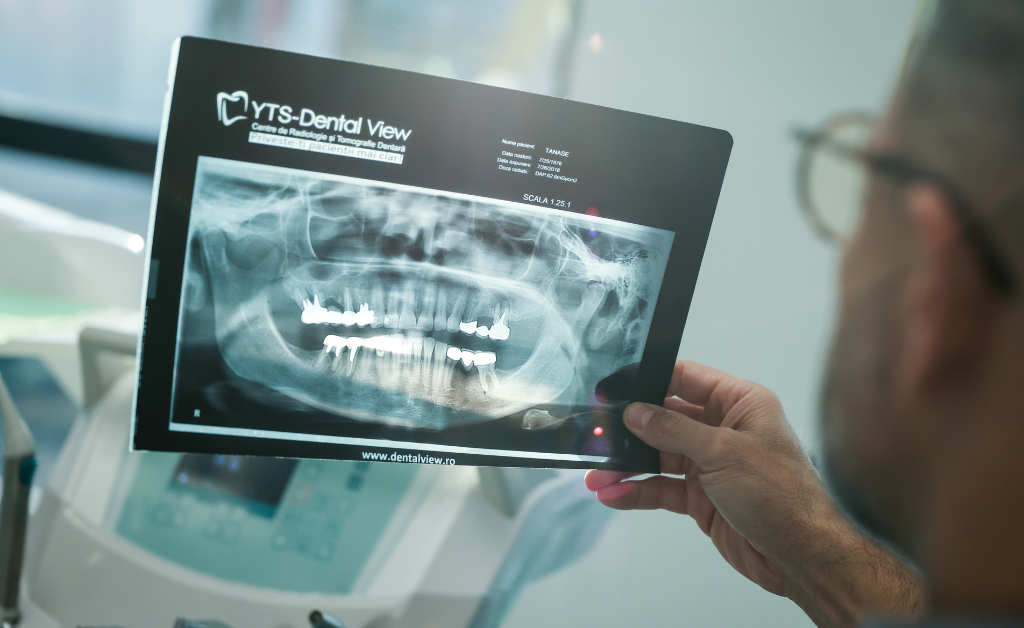
A simple clinical evaluation, along with a panoramic X-ray, allows the dentist to see exactly the direction in which the molar is growing and to decide whether treatment is necessary or whether the tooth can be safely monitored.
Frequently Asked Questions
In the past, they helped chew tough, uncooked food. Due to changes in modern diets and alterations in the bone structure of the jaws, wisdom teeth no longer play an essential functional or masticatory role in the oral cavity.
The typical age range for eruption is between 17 and 25 years. The age may vary depending on each patient’s anatomy, and in approximately 15–20% of the population, these molars do not develop at all.
Extraction is recommended to prevent crowding of the other teeth, the development of deep cavities in hard-to-reach areas, and the development of infections or inflammation in the gums.
The main recommendation is to schedule a dental appointment for an X-ray evaluation and appropriate treatment.


