 EN
EN  RO
RO  FR
FR 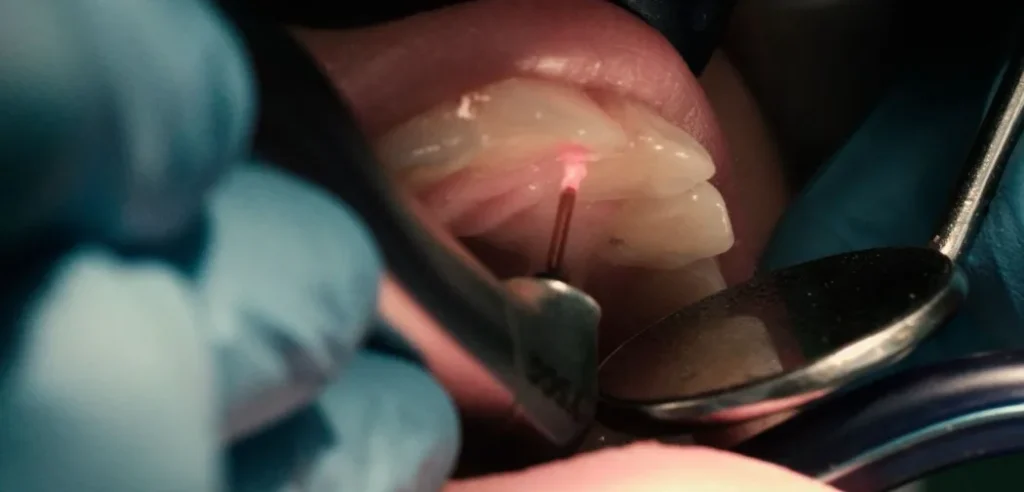
Periodontal disease (periodontitis, (as it is commonly known) has long since ceased to be a hopeless diagnosis. While traditional treatments in the past involved invasive surgical procedures—often painful and requiring long recovery periods—modern technology has brought an extraordinary ally to dental offices: the dental laser.
At Dr. Nicolau's clinic, we prioritize minimally invasive solutions, and the use of lasers in periodontal therapy is currently the gold standard for patients who want to save their natural teeth—without a scalpel and without pain.
In this article, we take a detailed look at the two main applications of lasers in the treatment of periodontitis: high-precision bacterial decontamination and the stimulation of tissue regeneration.
1. Thorough Bacterial Decontamination: Beyond the Limits of Conventional Treatment
The main cause of periodontal disease is bacterial plaque and tartar that accumulate in periodontal pockets—the spaces that form between the tooth and the gum as a result of the recession of the supporting tissue.
Conventional treatment (scaling and subgingival root planing) is essential for removing coarse tartar deposits. However, manual instruments have geometric limitations: they cannot effectively penetrate all micro-irregularities of the tooth root or deep areas.
This is where the major advantage of the dental laser comes into play:
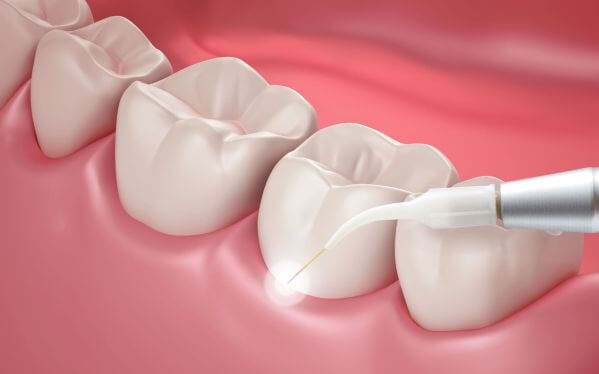
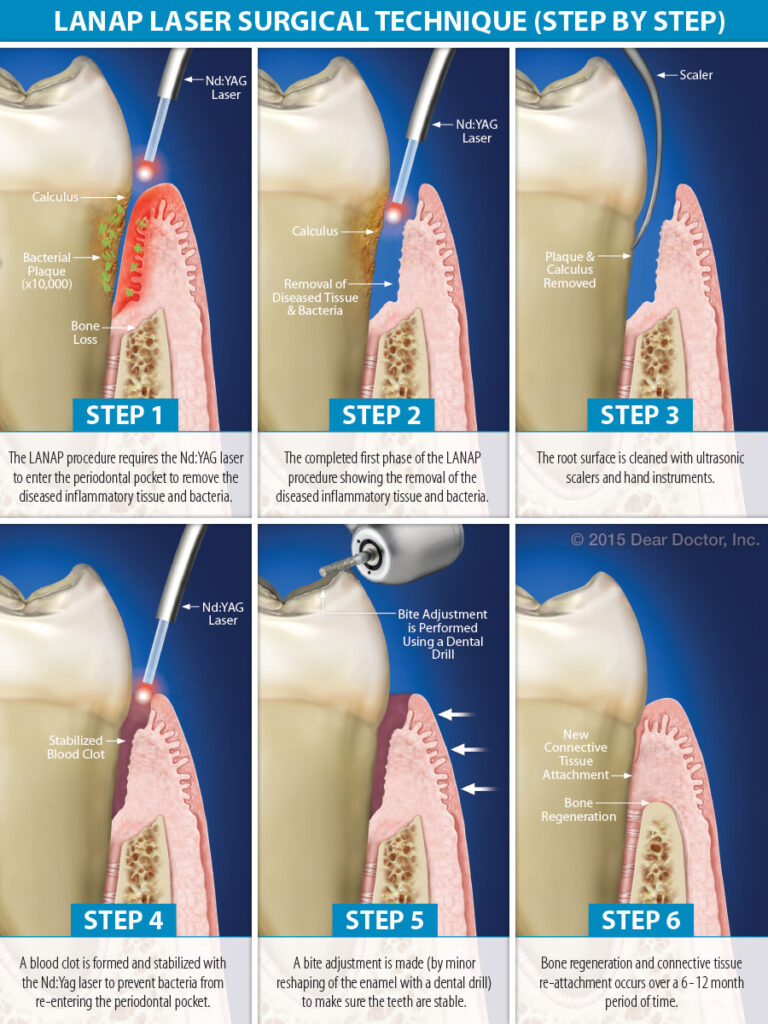
- Targeted bactericidal effect: Laser light penetrates deep into the periodontal pockets and destroys pathogenic bacteria (such as Porphyromonas gingivalis), including those in the deep layers of soft tissue, where conventional instruments cannot reach.
- Selective approach: The laser's wavelength is absorbed only by inflamed, diseased tissue and bacterial colonies. Healthy gum tissue remains completely unaffected.
- Real-time sterilization: In addition to eliminating bacteria, the laser energy inactivates bacterial toxins, creating a sterile environment that is ideal for healing.
2. Biostimulation and Regeneration: Resetting the Body’s Own Healing Mechanisms
Eliminating bacteria is only half the battle. For periodontal treatment to be truly effective in the long term, the gum must reattach to the tooth, and the affected bone must stabilize.
The dental laser not only cleans but also repairs by the phenomenon of biostimulation:
- Activation of stem cells and fibroblasts: The low-energy laser stimulates local cells to produce new collagen, the building block for restoring gum attachment.
- Neoangiogenesis (the formation of new blood vessels): The laser improves microcirculation in the treated area. Optimal blood flow means a greater supply of oxygen and nutrients, dramatically accelerating the healing process of the gums.
- Reducing inflammation and pain: The laser blocks the transmission of pain signals to the brain and reduces the release of inflammatory compounds. Patients report significantly greater postoperative comfort compared to traditional surgery.
Clinical outcome: Through thorough decontamination and cellular stimulation, periodontal pockets shrink, the gums regain their healthy pink color, and bone loss is halted.
The Benefits of Laser Periodontal Therapy at a Glance
For patients who put off going to the dentist out of fear of pain, laser therapy completely changes their perspective:
- No scalpel, no sutures: The procedure is minimally invasive.
- Minimal or no bleeding: The laser has the ability to instantly coagulate blood vessels during treatment (hemostatic effect).
- Maximum comfort: Most laser periodontal procedures do not require injectable anesthesia or require only a very small amount.
- Quick recovery: The patient can resume daily activities immediately after leaving the clinic.
Frequently Asked Questions
No, the procedure is not painful. Most patients describe a mild sensation of warmth or a slight tingling. In most cases, laser periodontal treatment is performed without injectable anesthesia or with only topical anesthesia (numbing gel). Because the laser does not vibrate or put pressure on the tissues, it is much more comfortable than traditional instruments.
Dental lasers use a technology called biostimulation (photobiomodulation). The laser light activates local cells (fibroblasts and stem cells) and stimulates the formation of new blood vessels in the gums. This process increases the supply of oxygen and nutrients to the area, helping the gums heal quickly, become firm, and reattach to the tooth, while also halting bone resorption.
Periodontal disease is a chronic condition, which means it cannot be „cured” permanently in the sense of completely eliminating the predisposition to it. However, laser therapy is currently the most effective method for halting the progression of the disease and keeping it under control. By eliminating bacteria from hard-to-reach areas and regenerating tissues, teeth regain their long-term stability.
The number of sessions varies depending on the stage of periodontal disease (mild, moderate, or advanced). In general, the treatment plan at Dr. Nicolau’s clinic may include between 2 and 4 sessions focused on decontamination and biostimulation. After completing the initial treatment protocol, periodic follow-up and cleaning visits are recommended every 3 to 6 months.
Recovery after laser treatment is extremely quick because there are no incisions or stitches. In the first few days after treatment, it is recommended that you:
- Thorough but gentle oral hygiene (using a soft-bristled toothbrush).
- Rinsing the mouth with antiseptic solutions recommended by the periodontist.
- Avoid foods that are very hot, spicy, or hard (nuts, seeds) that could irritate your healing gums.
- Avoid smoking for at least 48 hours, as nicotine slows down the healing process.