 EN
EN  RO
RO  FR
FR 
The Revolution in Diagnostics Through a Fully Digital Workflow
The success of a modern dental implant begins long before the actual procedure, through a fully digital workflow that eliminates human error and uncertainty.
- Advanced 3D Diagnostics: We use computed tomography (CBCT) to obtain a high-resolution three-dimensional image of the maxillary bone.
- Precise intraoral scanning: We're replacing traditional fingerprints with digital scanning, which faithfully captures the details of soft tissues.
- Overlaying anatomical data: Technology allows us to visualize critical structures, such as nerves or sinuses, for complete safety.
- Virtual simulation: We plan the ideal implant placement with precision down to fractions of a millimeter in a digital environment before treatment begins.
This rigorous planning phase transforms implant placement from a rough procedure into a surgical intervention with millimeter-level precision, ensuring safe and long-lasting results.
Digitally Guided Surgery and Minimally Invasive Precision
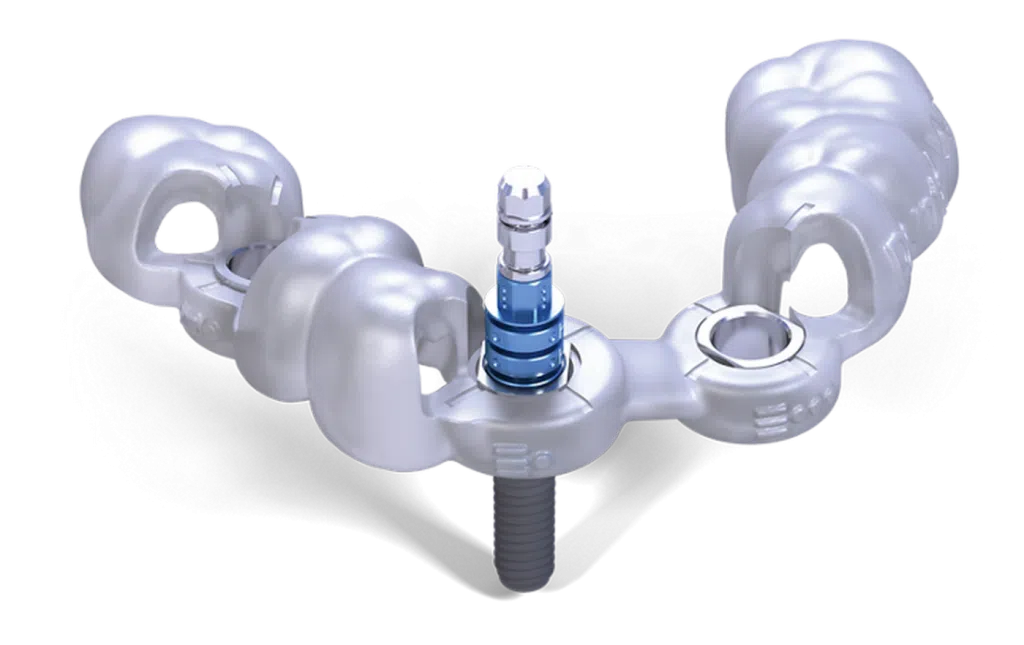
Once the virtual planning is complete, we transfer the entire digital design directly into the oral cavity using 3D-printed surgical guides. These customized devices function as a high-precision map, guiding the implant exactly to the predetermined angle and depth.
Notable benefits for the patient:
- Minimally invasive procedure: The incisions are much smaller or, in many cases, nonexistent.
- Enhanced comfort: Bleeding is kept to a minimum, and tissue trauma is strictly controlled.
- Reduced time spent sitting: Using the guide significantly shortens the duration of the surgical procedure.
- Accelerated recovery: Postoperative inflammation is virtually nonexistent, which accelerates the body's natural healing process.
This technology-driven approach transforms the surgical experience from a stressful one into a predictable one, ensuring that every step is performed with millimeter precision.
CThe concept of immediate loading and the "Teeth in 24 Hours" protocol
The biggest psychological barrier for patients has always been the long period of time spent without teeth or the discomfort caused by removable dentures. In 2026, the instant-charge protocol has permanently eliminated this stress, allowing us to move directly to the prosthetic phase if the implant is optimally stable.
The major benefits of the instant charging concept:
- Instant Smile: You receive a prosthetic restoration scheduled on the same day or within 24 hours of the procedure.
- CAD/CAM Technology: The piece is computer-designed and CNC-milled for a flawless fit and appearance.
- Immediate functionality: It allows for normal eating and speaking immediately after the procedure, with no waiting period.
- No social discomfort: It completely eliminates the embarrassment or inconvenience caused by missing teeth (edentulism).
- High-end aesthetics: Although it is a temporary restoration, it looks and feels just like a natural tooth.
With this modern procedure, we radically transform the patient experience by providing a permanent and aesthetically pleasing solution in record time, so that your social life isn't disrupted in any way.
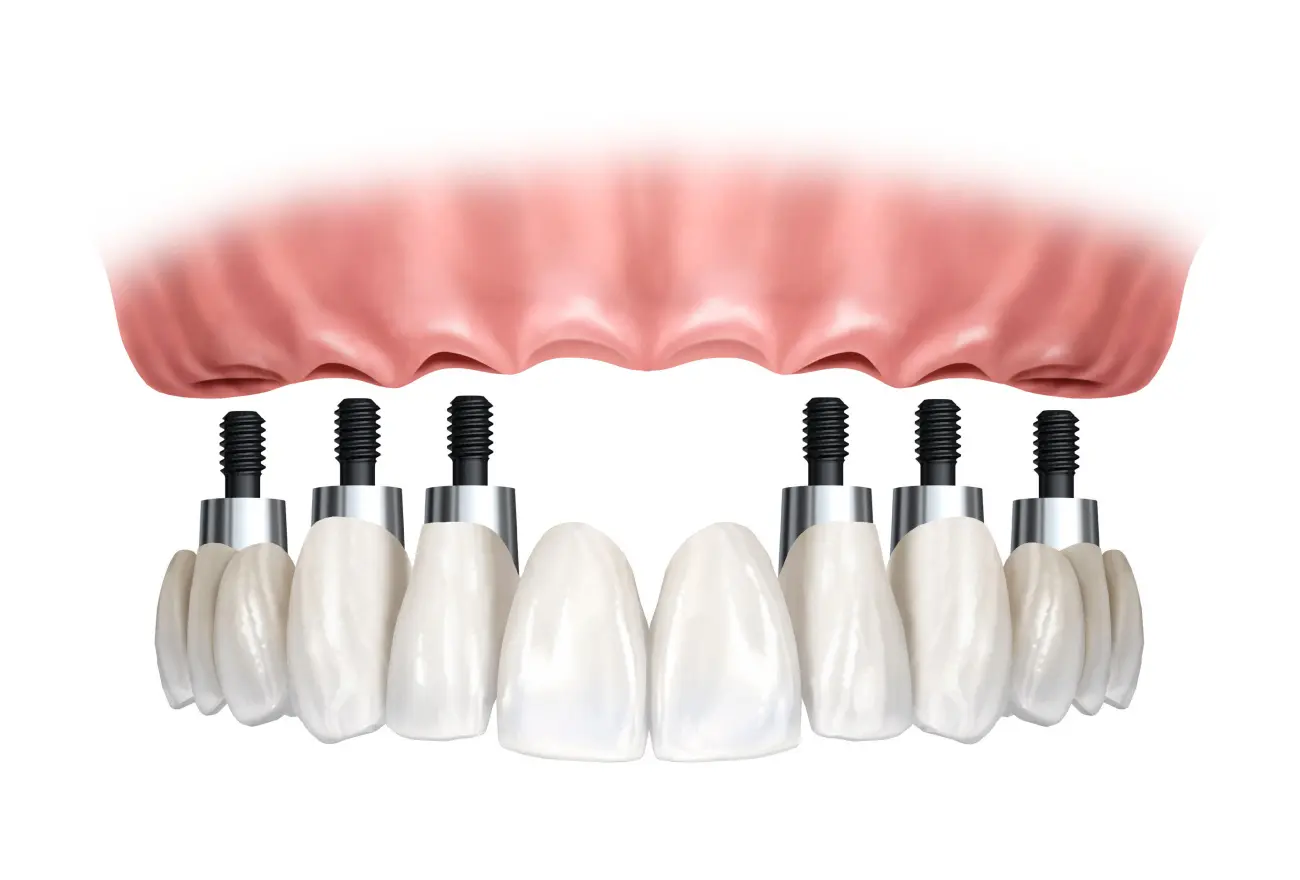
Recovery period and biological integration of the new root
Even though the smile is restored instantly thanks to the immediate upload, the process of osseointegration This remains the crucial stage that we monitor with the utmost care. During the first few months, bone naturally forms around the implant’s bioactive surface, creating the permanent structural bond that ensures lifelong stability.
What to Expect During Recovery:
- High level of postoperative comfort: Thanks to guided surgery, most patients require only mild pain relievers on the first day.
- Rapid social recovery: The absence of complex sutures and major trauma allows patients to resume their professional activities as early as the very next day.
- Minimal dietary adjustments: We recommend a soft-textured diet during the first few weeks to protect the implants during the stabilization phase.
- Accelerated healing: Modern technology minimizes inflammation, facilitating rapid tissue regeneration.
This balanced approach, combining immediate aesthetics with regenerative biology, ensures not only a beautiful smile from one day to the next, but also a solid and healthy foundation for the decades to come.
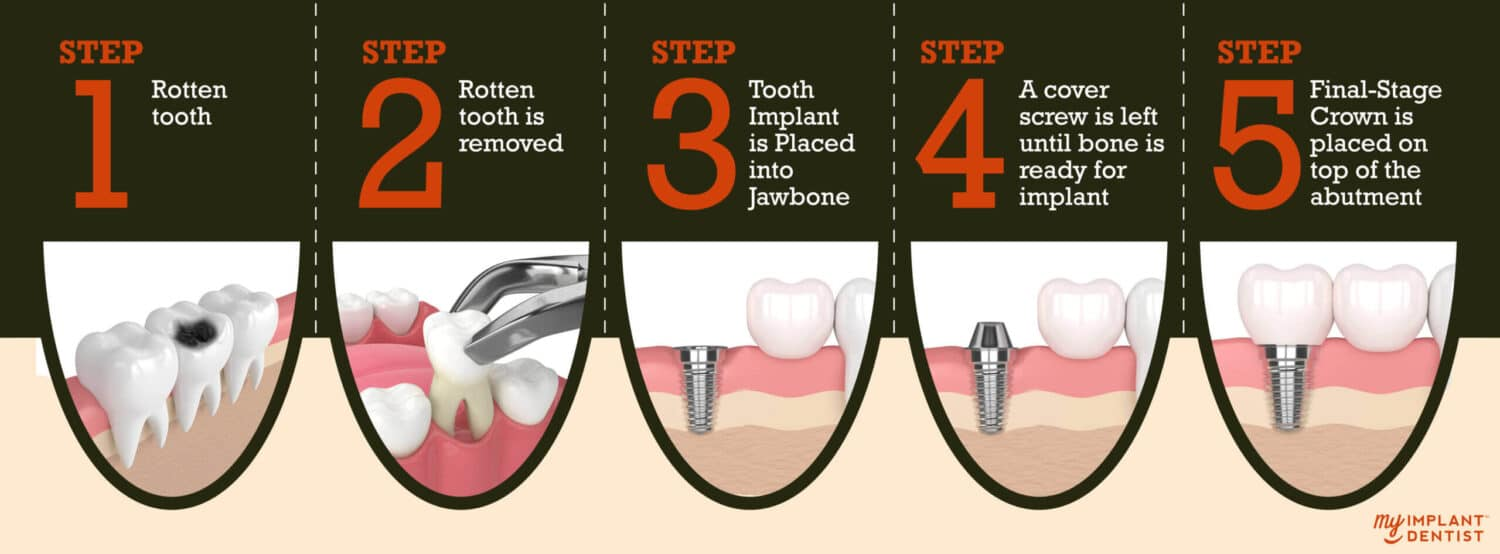
Frequently Asked Questions About Dental Implants
1. Can I really leave with fixed teeth on the same day my implant is placed?
Yes, thanks to the immediate loading protocol, this is possible. If the implant’s stability in the bone is sufficient (verified through precise digital measurements), we attach a fixed, aesthetically pleasing prosthetic restoration within a maximum of 24 hours. This way, you won’t go a single day without teeth, avoiding any social or aesthetic discomfort.
2. How painful is a digitally guided surgical procedure?
Guided surgery is much more comfortable than traditional methods. Because we use a 3D-printed guide that shows us the exact location, incisions are minimal or even nonexistent (no large cuts and no complex sutures). Most patients report only mild discomfort, which subsides with over-the-counter pain relievers on the first day.
3. How long does it take to recover from a dental implant?
Thanks to digitally guided surgery technology, recovery is surprisingly fast. Most patients return to their social and professional lives as early as the next day, since the absence of complex sutures minimizes inflammation. Although the biological integration of the implant (osseointegration) takes several months, postoperative discomfort is minimal and can be managed with mild pain relievers on the first day only.
4. Is there a risk that the body will reject the dental implant?
„Rejection” is extremely rare, as the titanium or zirconia used to make the implants are biocompatible materials. Failures usually occur due to poor oral hygiene or untreated systemic conditions, which is why the digital planning stage at Dr. Nicolau’s practice is so rigorous.
5. What is the lifespan of a dental implant?
If it is correctly placed through digital planning and properly cared for (daily oral hygiene and regular checkups), a dental implant is designed to last all my life. The prosthetic restoration (crown) may need to be replaced after 10–15 years due to normal wear and tear, but the titanium „root” remains firmly anchored in the bone.