
 EN
EN  RO
RO  FR
FR 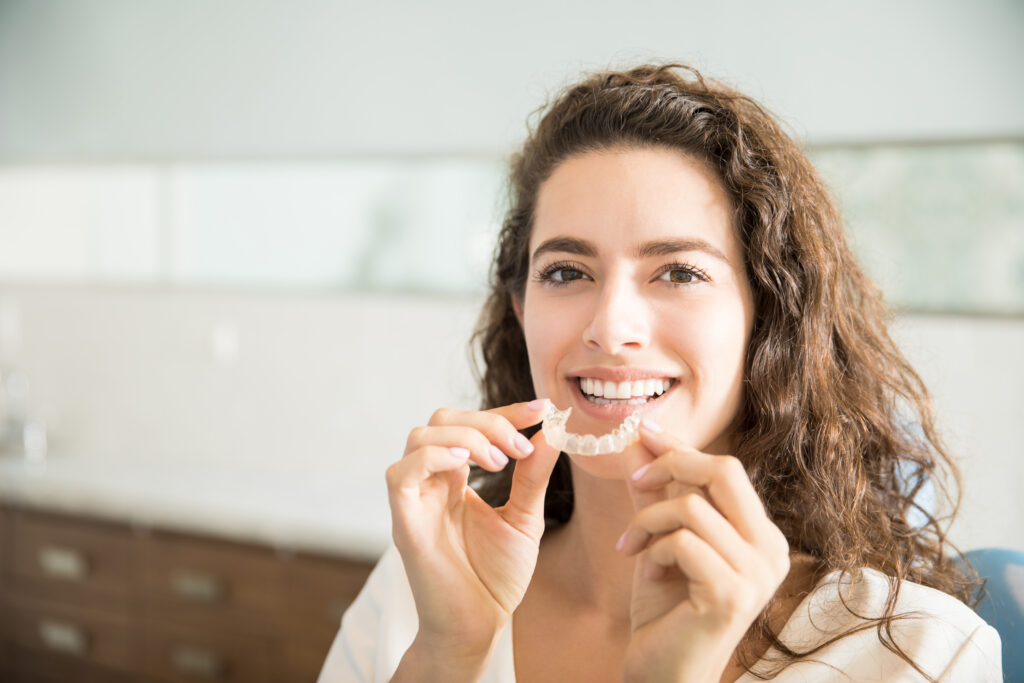
The perfect smile is no longer a luxury, but an investment in self-confidence. However, when it comes to straightening your teeth, the big question remains: will you go with the tried-and-true option of metal braces, or will you choose the freedom offered by clear aligners?
Technology has advanced tremendously, and today „braces”It doesn't necessarily mean braces and painful trips to the dentist anymore. Here's everything you need to know to make the right choice.".
Clear Aligners: Discretion and Comfort
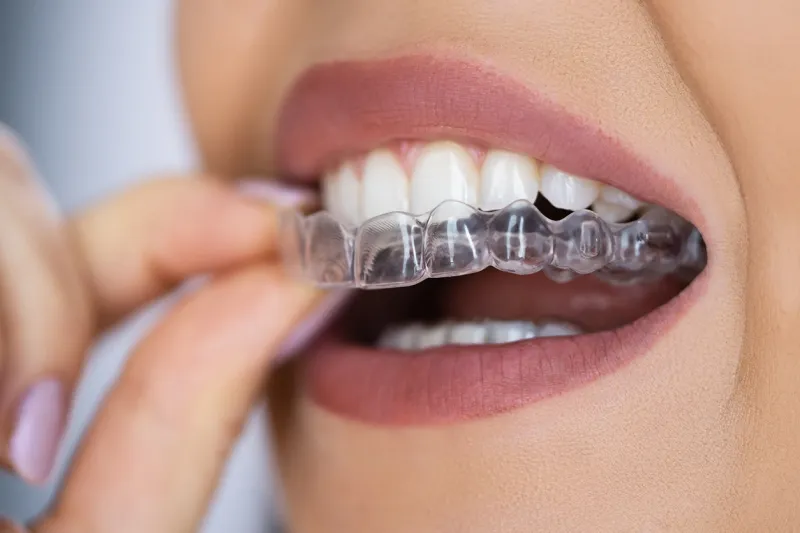
Systems of the type Clear Aligners (such as Invisalign or the Spark versions) have revolutionized orthodontics. These are sets of custom-made aligners, made of a clear polymer, that gradually move the teeth.
Advantages of Aligners:
- Unbeatable aesthetics: They're almost invisible. Most people won't even notice you're wearing anything.
- Easier hygiene: Since they're removable, you can brush your teeth and floss without any problems.
- No dietary restrictions: You take them out when you eat, so you can still enjoy hard or sticky foods.
- Enhanced comfort: There are no wires that poke or brackets that irritate the cheeks.
- Digital Predictability: You can see a 3D simulation of the final result even before you begin treatment.
Classic Dental Unit: The Power of Precision
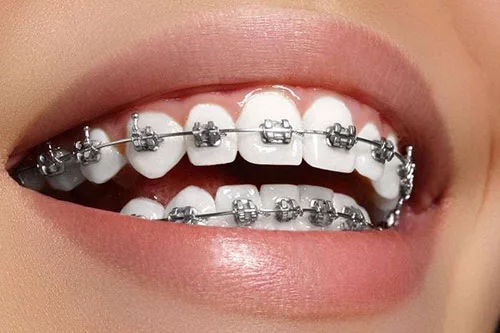
Although digital technology is rapidly gaining ground, fixed braces (with metal or ceramic brackets) remain the „gold standard” for complex cases.
Advantages of the Fixed Unit:
- Effectiveness in severe cases: Ideal for complex dental rotations or major bite (occlusion) problems.
- It doesn't require discipline: Since it’s bonded to your teeth, there’s no risk of „forgetting” to wear it (a common problem with mouthguards).
- Often lower costs: In general, the metal braces option is more affordable than aligner technology.
- Continuous monitoring: The orthodontist can make fine adjustments at each checkup to guide the teeth with millimeter precision.
Quick Comparison: Aligners vs. Traditional Braces
| Feature | Aligners | Fixed Braces |
| Visibility | Almost invisible | Visible (except for the ceramic ones) |
| Duration of treatment | Often shorter (mild/moderate cases) | Variable (standard in severe cases) |
| Hygiene | Very easy (to remove) | Requires special toothbrushes/oral irrigator |
| Pain/Discomfort | Minimum (light pressure) | Moderate (especially after activation) |
| Patient Compliance | Essential (22 hours/day of wear) | It's not necessary (it's fixed) |
Which option is right for you?
The choice isn't always a subjective one. Here are the criteria you should keep in mind:
- Lifestyle: If you're a public figure, speak in public a lot, or simply want complete discretion, mouth guards are the way to go.
- Complexity of the case: If you have severe dental irregularities, your dentist may recommend fixed braces for a stable, long-term result.
- Self-discipline: If you know you'll forget to put your aligners back in after a meal, a fixed braces system saves you from the risk of unnecessarily prolonging your treatment.
Frequently Asked Questions
For aligner treatment to be effective, the aligners must be worn between 20 and 22 hours a day. They should only be removed during meals and for oral hygiene. Failure to follow this schedule may prolong the duration of treatment or lead to unsatisfactory results.
In general, clear aligners are considered much more comfortable. Since they don’t use wires or metal brackets, there’s no risk of injuring your cheeks. You’ll feel a slight pressure with each new set of aligners, but this usually goes away within 24–48 hours.
Yes! Teeth can be straightened at any age, as long as the gums and bone structure are healthy. Clear aligners are extremely popular among adults precisely because they are discreet and do not affect one’s professional image.
Generally, aligner technology (Invisalign/Spark) is more expensive because it involves 3D scanning, digital printing, and state-of-the-art materials. However, in recent years, the price difference has narrowed, and many clinics offer installment payment plans.
Absolutely. Whether you choose aligners or traditional braces, your teeth tend to shift back to their original position. After treatment is complete, you’ll wear a retainer at night to keep your perfect smile for life.
The average treatment time is between 12 and 24 months. However, in mild cases of crowded teeth, aligners can produce final results in as little as 6–9 months, often faster than traditional braces for minor corrections.